
Slab Leak Detection
& Foundation Repair
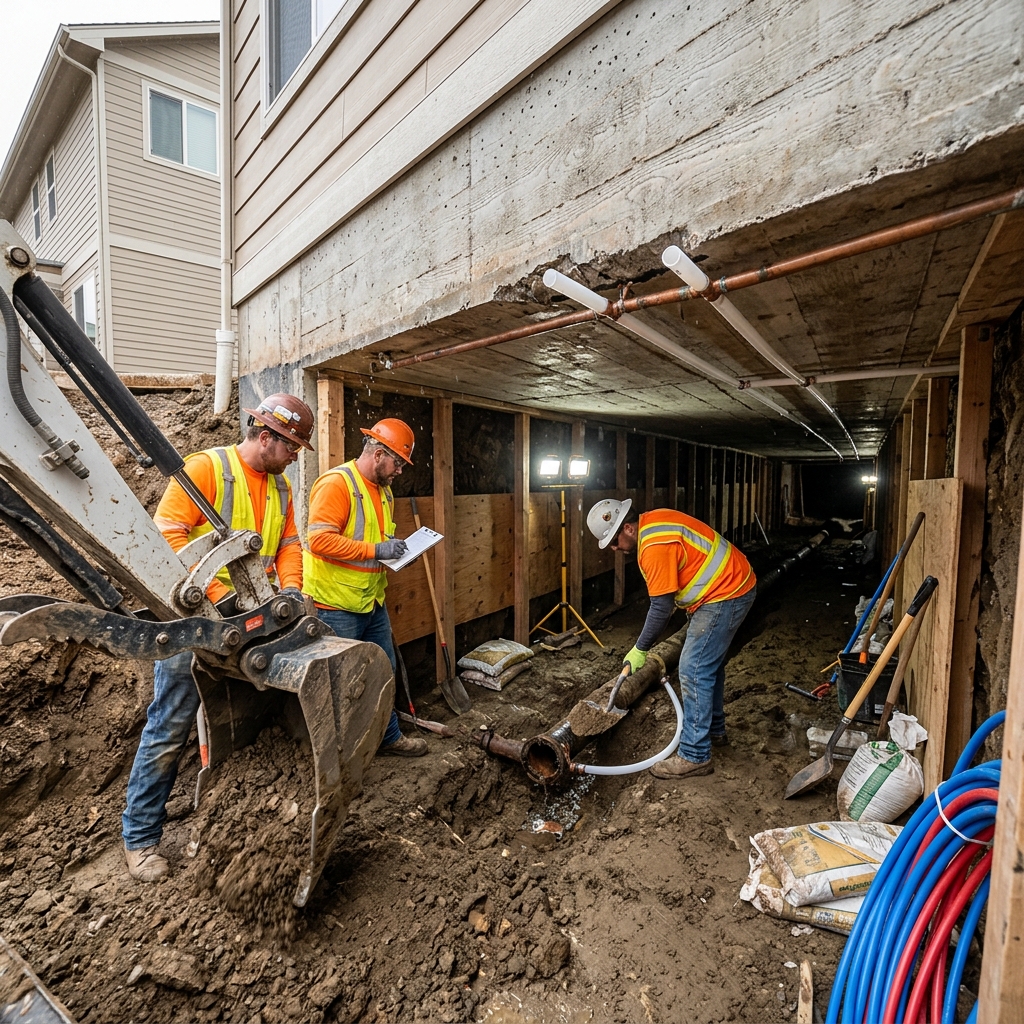
Expansive Texas clay soils shift and crack water lines beneath your foundation. We locate under-slab leaks non-invasively and perform targeted structural repairs via routing or tunneling.
24/7 Dispatch Active
We have licensed master plumbers on call across Texas. Call our emergency response line now for immediate dispatch.
Slab Leak Triage Steps
If you suspect water is escaping beneath your slab foundation, follow these steps to limit foundation movement and settling.
Main Shut Off
Turn your street-side water valve clockwise to halt pressurized water loss underneath your concrete structure.
Halt Heater
Shut off power/gas to your water heater. Hot water leaks are particularly destructive to sub-slab soils.
Record Meter
Take a photo of your water meter reading. This documents continuous water loss for homeowners insurance claims.
Mark Spot
Mark warm spots on flooring, warped floorboards, or damp walls to help diagnostic technicians.
Call Dispatch
Contact our hotline to dispatch a licensed leak detection specialist carrying sonar sensors.
Slab Leak Catalysts & Signs
Concrete slab foundations face intense stress due to geology, mineral properties, and water action.
Swell-Shrink Clay Cycle
Texas clay soils expand heavily during rains and shrink dramatically during dry summers, creating pockets of air beneath the concrete slab that bend plumbing pipes until they shear.
External Electrolysis
High mineral soils react chemically with bare copper lines. Lacking protective sleeves, copper lines develop external corrosion that creates tiny water pinholes.
Thermal Friction
Hot water lines expand and contract when in use. If pipes run through concrete without a sleeve, friction creates thin spots that eventually leak.
Warm Floor Spots
Walking barefoot, you notice hot patches on tiles or hardwood. Hot water escaping beneath concrete slabs transfers heat directly through your flooring.
Foundation Damage
Escaping water washes away sub-slab soil, causing the concrete foundation to settle and crack drywall, bricks, window frames, and doors.
Slab Heaving
Escaping sub-slab water expands dry clay beneath your foundation. This creates upward hydrostatic pressure that lifts the concrete and cracks tiling.
Our Sub-Slab Diagnostic Flow
We locate under-slab leaks non-invasively using electronic listening discs, thermal infrared imaging, and path tracing.
Pressure Testing
We isolate hot/cold supply manifolds or drain lines, applying mechanical pressure gauges to identify which line is leaking.
Acoustic Sonar Scan
We scan floors with electronic listening discs to capture the high-frequency vibration of escaping water.
Thermal Infrared Mapping
We map hot-water lines under flooring using infrared cameras to identify heat plumes radiating through the concrete slab.
Path & Pipe Tracing
We trace the layout of under-slab piping using digital sensors to map out the best access path.
Slab Leak Repair Pathways
We offer multiple repair methods to access and replace broken lines depending on the layout and damage.
1. Under-Slab Tunneling
We dig small access pits outside the building foundation and tunnel horizontally under the concrete slab. This allows us to access and repair pipes directly without cracking concrete floors or disturbing your home interior.
2. Manifold Re-Routing
We isolate the leaking sub-slab line and abandon it. We then route a new line through attic spaces, cabinets, or baseboards to restore water flow, bypassing the under-slab soil completely.
3. Direct Slab Penetration
For easily accessible areas, we jackhammer a small section of concrete directly over the leak. We then repair the damaged pipe segment and patch the concrete floor.
Slab Leak FAQs
Common questions on professional slab leak detection and foundation tunneling.
TSBPE Registered Plumbers • Regulated by TSBPE
Protect Your Foundation & Structural Integrity
All services are backed by our flat-rate upfront pricing and clean-workmanship guarantee.